GBS : International ERP designed for LPG Business
GBS is the LPG management software built specifically for propane and LPG distributors, not a generic ERP adapted to fit the gas business. From purchase orders and stock to customer service, invoicing, and tank operations, GBS runs the full commercial and technical cycle of an LPG distributor in one integrated system, across every country you operate in.
The platform is made up of four modules: GBS (the core ERP), CSCWeb (a self-service portal for your customers), GBSNav (a mobile app for delivery drivers), eCS (electronic customer service), GBSTech (a mobile app for field technicians). Together they cover the day-to-day of an LPG distribution business from the depot, to the delivery truck, to the customer’s meter.
Below is a detailed look at what each part of GBS manages, module by module.
PURCHASE ORDER MANAGEMENT
- Supplier contracts and pricing definition
- Purchase requests process and purchase orders workflow
- Good receipts managements
With GBS, purchase order management is directly integrated into your ERP data. Supplier contracts, pricing agreements and purchase requests all flow through the same system that manages your stock — so a purchase order isn’t a standalone document, it’s connected from day one to the depot it will replenish.
Goods receipts update stock levels automatically, and every movement is valued and posted to your accounting system in real time. There’s no separate reconciliation step between what physically arrived at the depot and what your books say arrived — GBS keeps both in sync as the transaction happens, which matters when you’re managing dozens of supply contracts across multiple countries and currencies.
This is the same logic that carries through to stock management, described next


STOCK MANAGEMENT
- Products movements creation and tracking
- Stock inventories and reporting
- Month Reconciliation Closure
- Large Direct customers management
- Manual invoicing for accessories
- Product management
- Depot and containers management
Stock management in GBS isn’t limited to counting product in a depot. It tracks every movement of bulk and packed gas from receipt to delivery, reconciles it monthly, and keeps large direct-account customers on their own management track separate from standard retail flows.
Because LPG distribution runs on containers and depots rather than a single warehouse, GBS manages stock by depot and by container, not as one undifferentiated number. That distinction is what makes month-end reconciliation close cleanly instead of turning into a manual spreadsheet exercise, a common failure point when a distributor tries to run gas stock through an ERP that was designed for retail merchandise rather than a metered, temperature-sensitive product moved between tanks.
CUSTOMER SERVICE CENTER
- Prospect and Customer data management
- Order management (Bulk and Packed)
- Customer account balance
- Transactions history
- Customer messaging
- Outlook integration
- Credit Control
- Full Stop Gas Management
The Customer Service Center is where your team manages the relationship, not just the transaction: prospect and customer data, order history across bulk and packed gas, account balances, and credit control all live in one place, alongside Outlook integration so email correspondence doesn’t live in a separate silo.
“Full Stop Gas Management” tracking a customer through to the point where deliveries stop, whether for non-payment, contract end, or a switch of supplier is built into the same workflow as order-taking. That matters in LPG distribution specifically: as much as 97% of small bulk LPG tanks in a market like France belong to the distributor, not the customer, under exclusive supply contracts that typically run 3 to 9 years. A customer service system for this business has to manage that asset and that contract, not just the invoice.


EFFICIENT BUSINESS MANAGEMENT
- Prospects and customers data
- Customer contract management
- Consumption and order forecasting
- Generation of systematic and automatic orders
- Bulk gas and cylinders deliveries
- Scheduled invoicing
- Customer payment at deliveries
- Wholesales supply, contracts and invoicing
- Metered gas process
This is the module that ties commercial planning to physical delivery. Consumption forecasting drives automatic order generation, so routine bulk gas customers don’t need a phone call to get their tank refilled before it runs low. Scheduled invoicing and payment-at-delivery are handled in the same flow as the delivery itself, whether the sale is bulk, packed, or metered gas billed on actual consumption.
Wholesale supply agreements, contracts and invoicing for customers who buy in volume rather than by individual delivery will run through the same engine, so a distributor with a mixed book of retail, wholesale and metered accounts isn’t juggling separate systems for each.
THIRD PARTY INVOICING
- Third party invoicing – engineers / installation / repair activities
- Bulk and packed agents commissions invoicing
- Manual preparation and invoicing
- Maintenance operation invoicing
Third party invoicing covers the work that happens around a delivery but isn’t the delivery itself: engineer call-outs, installation and repair work, maintenance operations, and the commissions owed to bulk and packed gas agents. GBS handles both the automatic cases and the ones that need a manual line, a repair job billed at a flat rate alongside one quoted on the spot, for instance without needing a separate invoicing tool bolted on afterward.

Built for LPG, Not Bolted Onto a Generic ERP
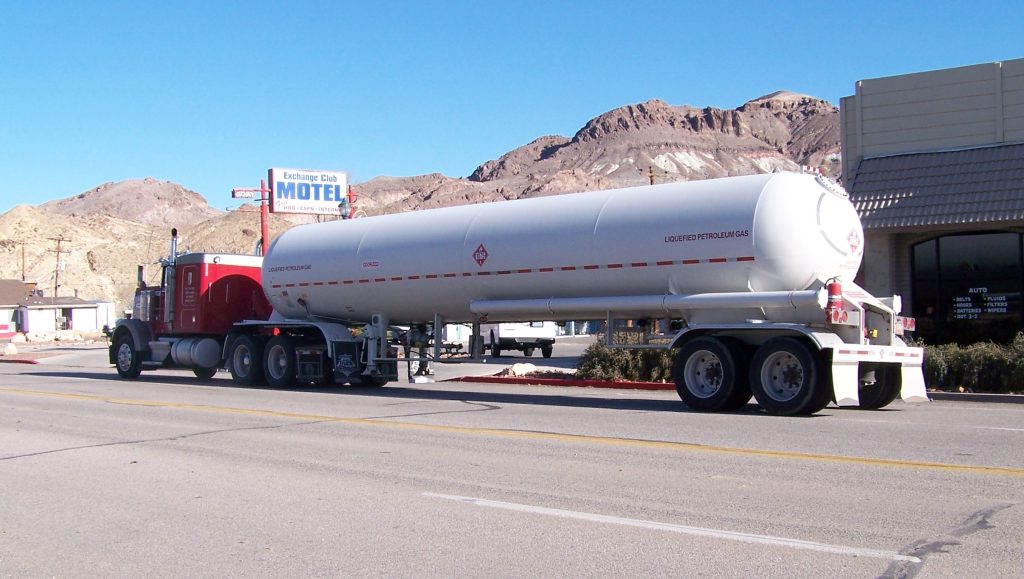
Most ERP systems are built for a generic sale of merchandise. LPG distribution isn’t that: it’s a product sold by weight but measured in temperature-corrected litres, delivered into a tank the distributor typically still owns, under a multi-year exclusive supply contract, with a cylinder deposit sitting as a liability on the balance sheet. None of that is a configuration setting in a standard ERP — it’s a different data model.
That’s the gap distributors run into when they try to make a generalist system work for LPG: tank ownership and inspection schedules, cylinder deposits and returns, route and delivery scheduling, and quantity conversion all end up bought separately, from separate vendors, and integrated after the fact. Panorama Consulting’s 2026 ERP Report — based on 170 ERP implementations surveyed globally — found that the leading cause of budget overrun on ERP projects is exactly this: the unforeseen need for additional technology once the project is underway.
GBS starts from the LPG business itself, so purchasing, stock, customer service, delivery and invoicing already share one data model — the tank, the cylinder, the contract, and the delivery are first-class objects in the system, not paperwork layered on top of it.
Want the detailed comparison against SAP, Odoo and generalist ERPs with real published pricing?
ONE SYSTEM, EVERY COUNTRY YOU OPERATE IN
GBS has been deployed across 17 countries since 2000, the same core client relationship has continued for more than two decades, through a change of parent group, without a change of system. On a day-to-day basis, GBS processes deliveries for roughly 50,000 LPG cylinders daily across that footprint.
Running one distributor’s business across multiple countries means the system has to handle more than translation: different currencies, different regulatory calendars for tank inspection, different invoicing rules. GBS is built to run as one system across that variation, rather than as separate national instances that need to be kept in sync manually.
ICEB, the company behind GBS, has been an LPG-focused software editor since 2000 and holds ISO 27001 certification. Source code is available through a third-party trustee, with release conditions in the client’s favor, a continuity guarantee that matters when you’re evaluating a smaller, specialised vendor against a large generalist.

Frequently Asked Questions
Yes. GBS has been deployed across 17 countries since 2000, and is built to run as one system across different currencies and regulatory environments rather than as separate national installations.
Tank ownership and inspection scheduling, cylinder deposits and returns, delivery route planning, and temperature-corrected quantity conversion are native to GBS. In a generic ERP, each of these is typically a separate tool bought and integrated afterward.
LPG and bulk gas distributors handling cylinder gas, bulk delivery, or both from purchase order and stock through to customer service, delivery scheduling, and invoicing.
Request a demo and we’ll walk through the modules relevant to your operation, bulk, packed, or both.
By consolidating commercial and technical data into a single system, GBS simplifies customer service operations, ensures regulatory compliance, and boosts overall operational efficiency for energy distributors.